
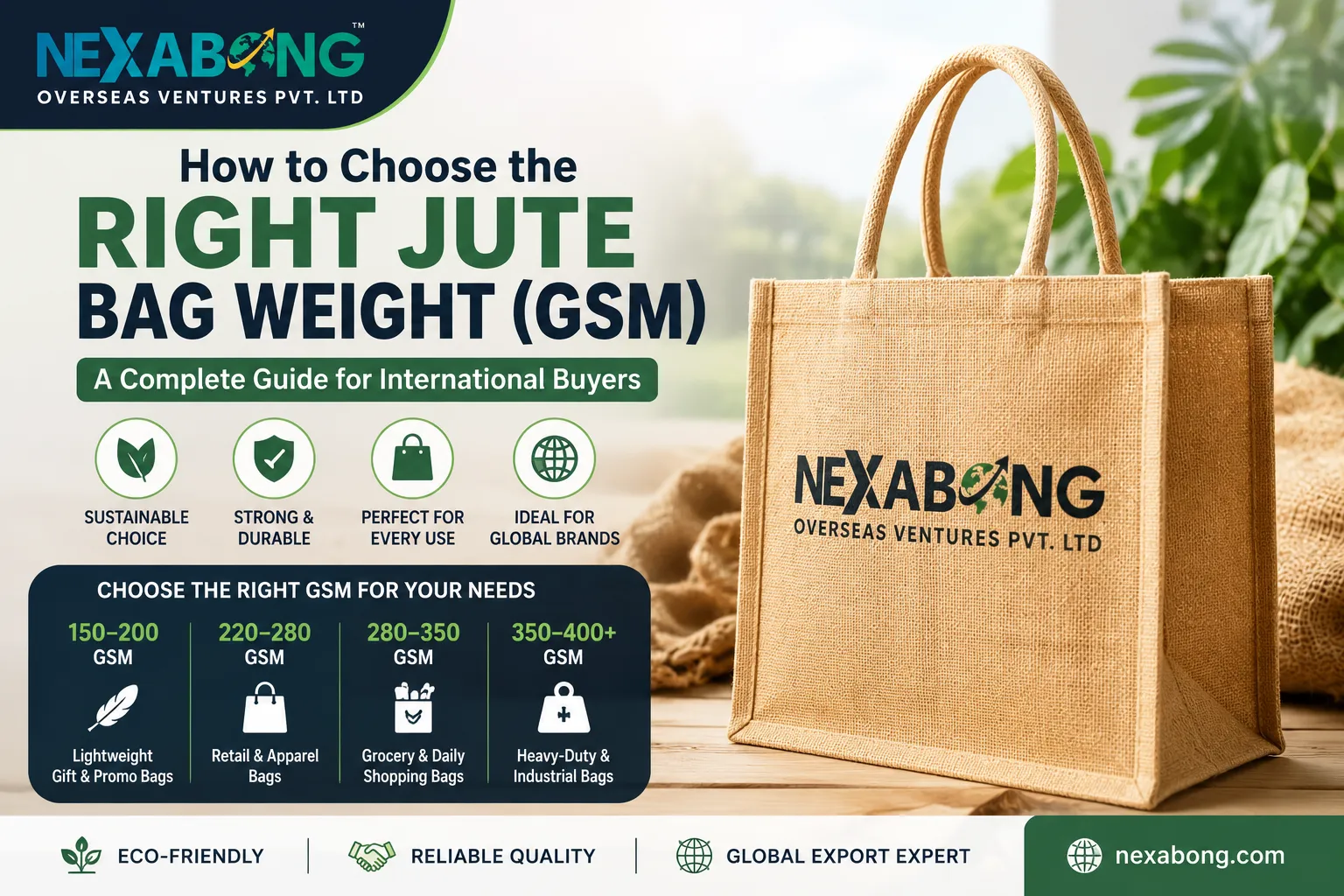
How to Choose the Right Jute Bag Weight for Your Product: A Complete Guide for International Buyers
When international retail brands, supermarkets, and corporate buyers transition to sustainable packaging, natural jute is often the first material of choice. Known for its incredible strength, biodegradability, and premium rustic aesthetic, jute has become the gold standard for eco-friendly bags.
However, one of the most critical mistakes a buyer can make is treating all jute bags as if they are identical. Ordering a bulk shipment of jute bags without specifying the correct fabric weight can lead to disastrous results—from bags that collapse and look cheap, to handles that tear under the weight of a customer’s groceries.
To secure the perfect packaging for your specific product, you must understand the language of fabric density: GSM.
In this comprehensive B2B guide, we will break down exactly how to choose the right jute bag weight for your specific industry needs, ensuring that your next import order with a premier manufacturer like Nexabong Overseas Ventures is a complete success.
Understanding GSM: The Universal Metric of Fabric Weight
In the textile industry, fabric weight is measured in GSM, which stands for Grams per Square Meter. This metric directly influences the texture, structure, and overall durability of the bag.
When you increase the GSM, you are increasing the density of the weave. A higher GSM means more jute fiber is packed into that square meter, resulting in a thicker, stronger, and more rigid fabric. Conversely, a lower GSM yields a lighter, more flexible, and softer material.
Choosing the perfect GSM is about striking the right balance between structural strength, aesthetic appeal, and unit cost.
The Jute Bag GSM Selection Guide
To help you navigate your procurement process, here is a breakdown of standard jute GSM ranges and their ideal commercial applications:
1. Lightweight Jute (150 – 200 GSM)
This is the thinnest category of woven jute. Because the weave is less dense, the fabric is highly flexible, soft to the touch, and easy to fold.
Best Used For: Gift packaging, small cosmetic pouches, jewelry bags, and lightweight promotional giveaways.
The Buyer's Edge: If you are packaging small, lightweight artisanal goods (like organic soaps or coffee beans), a low-GSM drawstring pouch offers an earthy, premium unboxing experience while keeping your shipping and material costs incredibly low.
2. Medium-Weight Jute (220 – 280 GSM)
This is the transitional weight class, offering a great balance between cost-efficiency, flexibility, and moderate durability.
Best Used For: Standard retail shopping bags, apparel store packaging, and corporate event tote bags.
The Buyer's Edge: If your bag only needs to carry a few lightweight items (like t-shirts, brochures, or lightweight boxed goods), this GSM range prevents the bag from feeling overly stiff while still providing a reliable, eco-friendly carrier.
3. Heavy-Weight Jute (280 – 350 GSM)
This is the industry standard for high-quality, reusable retail packaging. Fabrics in this range feel substantial, featuring a rugged texture that visually communicates durability and natural origin. High GSM fabrics provide excellent shape retention and stiffness, allowing the bag to stand upright.
Best Used For: Everyday grocery shopping bags, heavy retail merchandise, and structured fashion totes.
The Buyer's Edge: A good everyday shopping bag typically utilizes a 280 to 320 GSM fabric. If you are designing a bag specifically for carrying wine bottles or heavy specialty foods, pushing the weight closer to 350 GSM is highly recommended.
4. Ultra-Heavy / Industrial Jute (350 – 400+ GSM)
When failure is not an option, you move into the ultra-heavy category. These bags are engineered to take severe punishment.
Best Used For: Heavy-duty grocery hauls, large beach bags, and bulk commercial packaging. A high-quality bag with a GSM of 400 or higher can handle heavy loads without breaking a sweat.
The Buyer's Edge: For industrial and agricultural storage requiring capacities of 50 to 100 kg, specialized gunny bags utilize fabric weights ranging from 350 up to 900 GSM to ensure the bags do not tear during bulk transport.
Crucial Factors to Consider When Selecting Your GSM
Before finalizing your tech pack with your manufacturer, evaluate these three core operational factors:
1. Calculate Your Product’s Load Capacity
The golden rule of packaging is to engineer for the heaviest possible scenario. If a customer fills your retail tote with 10 kilograms of canned goods, will the fabric warp or tear? For heavy loads, specify a GSM of 300 or above and ensure your manufacturer uses reinforced, cross-stitched handles to support the structural integrity of the heavy fabric.
2. Structural Aesthetics vs. Flexibility
Do you want the bag to stand up on its own when placed on a counter? If you are designing a boxy, flat-bottomed bag (often enhanced with inner food-grade lamination), you require a heavier GSM (280+) to maintain that crisp, structured silhouette. If you want a casual, slouchy beach tote that can be easily rolled up and packed into a suitcase, a medium GSM (220-250) is much more appropriate.
3. Freight Logistics and Landed Costs
It is crucial to remember that GSM stands for grams per square meter. A higher GSM directly increases the physical weight of each individual bag. When you are importing 50,000 units in a sea container, upgrading from 250 GSM to 350 GSM adds significant tonnage to your overall shipment. Always balance your need for durability against your international freight budget.
Why Nexabong Overseas Ventures is Your Ideal Sourcing Partner
Understanding the technical specifications of jute is only half the battle; finding a manufacturer who strictly adheres to them is the true challenge. The international market is full of suppliers who promise a heavy 300 GSM bag but deliver a flimsy 220 GSM product to cut costs.
As a premier jute bag manufacturer headquartered in Kolkata, India—the literal epicenter of the world's finest golden fiber—Nexabong Overseas Ventures Pvt. Ltd. operates with absolute transparency and rigorous quality control.
Here is why international buyers trust Nexabong for their B2B import needs:
Guaranteed GSM Accuracy: We maintain strict oversight over our weaving mills. If you specify a 320 GSM fabric for your retail line, our multi-tier QC team ensures that the raw fabric precisely matches that density before a single bag is stitched.
Complete Customization (OEM): We do not force you into pre-set templates. You dictate the exact GSM, dimensions, handle types, and lamination requirements to perfectly suit your brand's unique needs.
Flawless Export Logistics: Navigating cross-border trade can be complex. Our dedicated export division manages all necessary certifications, FOB/CIF shipping arrangements, and secure packaging to ensure your bulk order arrives at your destination port safely and on time.
Secure Your Custom Jute Packaging Today
Choosing the right jute bag weight is the foundation of a successful sustainable packaging strategy. By matching the correct GSM to your product's specific demands, you protect your merchandise, elevate your brand's perceived value, and guarantee a long lifespan for your eco-friendly bags.
Ready to manufacture the perfect jute bag for your international market? Partner with the experts at Nexabong Overseas Ventures. Visit









Comments (0)
Leave a Comment